The Danish Research Network
The Research Network is designed to meet the requirements of the research and education world for a robust network, which in many ways makes it something completely different from a commercial internet connection.

The Research Network connects the Danish universities and research institutions directly with each other, with the other research networks in the world and with the Internet in general. This means that there are a number of advantages to using the research network over a regular connection with a commercial internet provider.
- Surplus capacity
- Low delay
- Guarantee of quality to the end
- International cooperation
- Platform for testing, development and co-ownership
- Access to services
The research network worldwide
The research network connects to other national and international networks, linking the world with your desktop or lab equipment. The research network in Denmark connects to research networks in the rest of the world through a number of partners. It also offers a range of related services such as wireless networking and VPN connections. The research network provides international connections via NORDUnet and GÉANT.
Optic fibres to 275 addresses
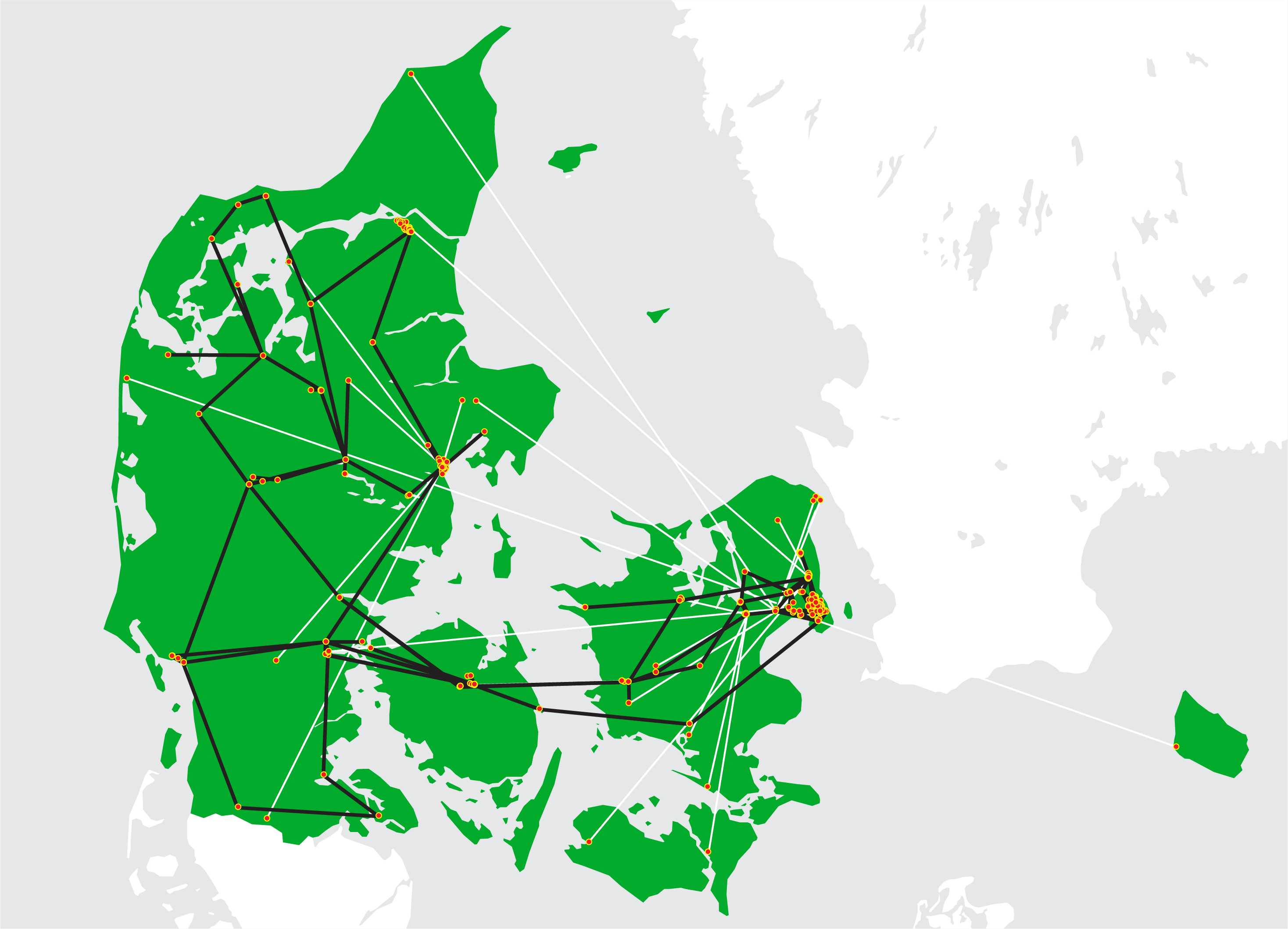
The research network is a high-speed network that connects Danish universities and research institutions. The network has existed since 1987 and has around 90 institutions connected.
The network is built on proprietary optical fibers, which in practice means that upgrades are cheap or free, that the network cannot be tapped remotely and that reliability in crisis situations is very high.
The international connections are made from the two hubs in Ørestad and Lyngby (where there is also a connection to the rest of the Danish internet via DIX). From here, a number of 10 and 100 Gbps connections are made to the institutions across the country.
In addition, there are many direct connections across the network to support internal networks at geographically separate locations for the individual institutions - especially in the major cities.
International traffic from Denmark goes via NORDUnet and GÉANT from both Lyngby and Ørestad.
Benefits of the research network
Here you can read more about the benefits of using the Research Grid over a regular connection with a commercial ISP.
In the research network, we have a 10Gbps connection and do not share the capacity in the backbone with other users, like the commercial network providers do.
In its network design, the research network is optimized to achieve the shortest possible delay with the most direct paths and the least amount of equipment on the road - something that cannot be achieved in the same way with commercial networks.
The research network ensures quality all the way to the other end, both on the routed internet and dedicated point-to-point connections. Both in Denmark and internationally. A guarantee you don't necessarily get with a traditional internet connection.
With the Research Network you get access to a world of dedicated services developed to support research and teaching.
The construction with a special network for research and educational institutions is widespread in most of the world. Ensuring quality and bandwidth for international connections, and otherwise cooperation on a number of services internationally, is possible by this international cooperation.
DeiC can provide direct access to the equipment, allowing IT and networking researchers to test theories and conduct experiments on parts of the infrastructure, while becoming part of a community where you can influence development.
Get help
If you need further information about information on the Research Network or related services, you will find relevant information on the individual pages.
If you want to know more, contact Martin Bech, Head of the Research Network.