LUMI accelerates AI model training for Danish startup
With support from EuroCC Denmark, Syncable has moved the training of its Small Language Models from commercial cloud environments to the European supercomputer LUMI. This has resulted in faster development and lower costs.

Syncable develops an AI-based platform that analyses software code and automatically generates the infrastructure needed to run applications in production. The platform inspects codebases and creates the necessary production configurations, including networking, access control and monitoring, allowing software to run across cloud platforms, on-premises servers and HPC environments. To achieve the required level of precision, the company develops its own specialised Small Language Models (SLMs), designed to understand software structure and dependencies in depth.
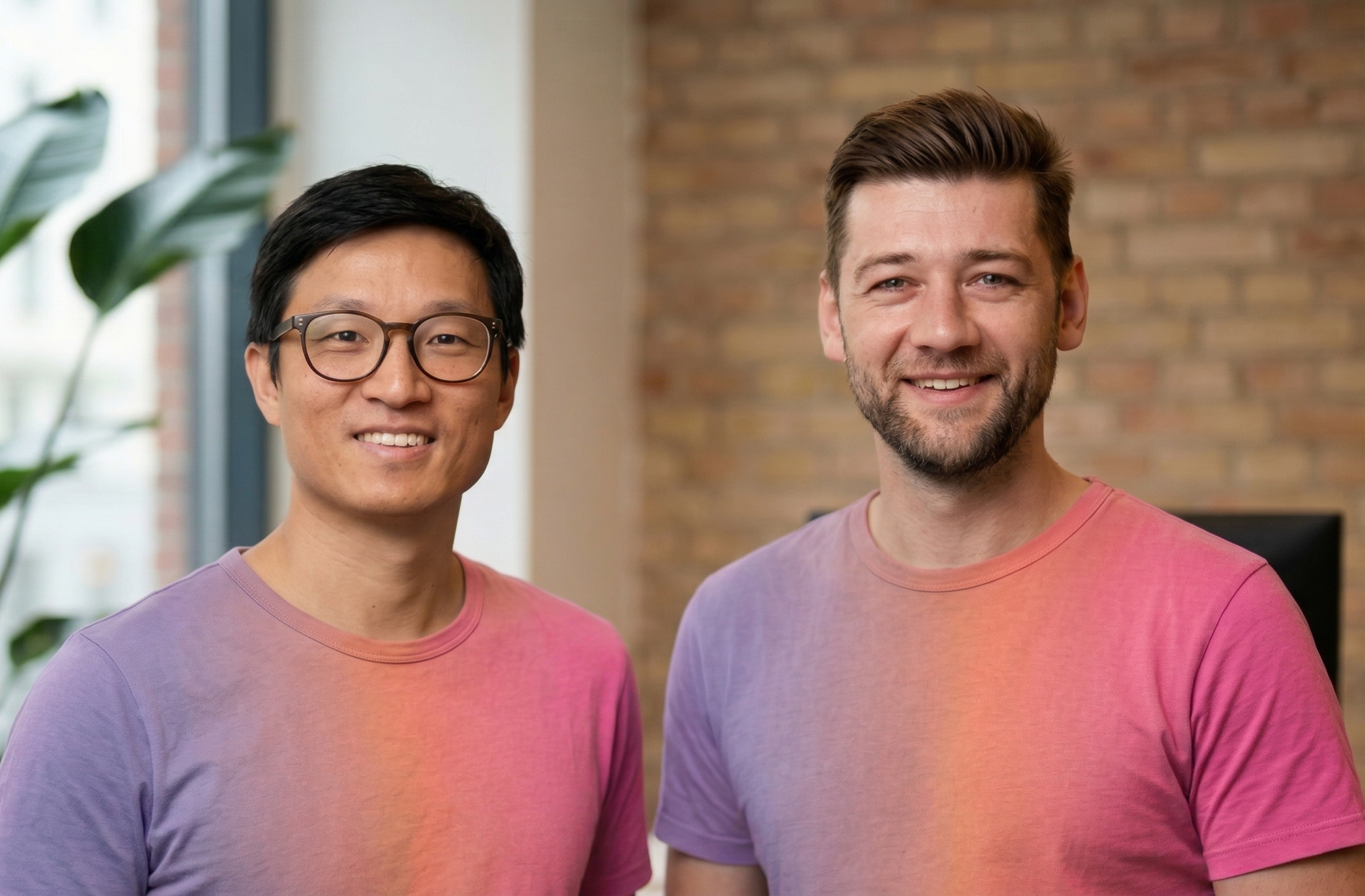
Through a strategic collaboration with EuroCC Denmark, the company received support in applying for access to LUMI, enabling them to train their models faster and at greater scale. According to Lishuai Jing, PhD and Co-Founder of Syncable, access to European HPC has been a gamechanger:
“Access to EuroHPC unlocks a critical cost factor for an early-stage deep-tech company. Previously, running comprehensive fine-tuning experiments on complex infrastructure logic would have burned through our budget and taken weeks on commercial clouds, restricting us to small-scale local testing. On LUMI, this opens the possibility "speed to outcome." We can run large-scale parallel training on our SLMs. This compute access provides us with the invaluable capability to iterate fast, drastically accelerating our journey from raw concept to a production-ready, highly accurate model”.
From cloud to HPC
In the early stages of development, Syncable trained its models in commercial cloud environments, which worked well for prototypes and smaller experiments. However, as the company moved from early concepts to building its own SLMs for generating software infrastructure, the need for compute resources grew significantly.
This became particularly evident when the models had to be trained on large datasets containing code and infrastructure configurations. At the same time, costs in commercial cloud environments became difficult to predict, and development speed began to be limited by delays in data transfer.
To train their models faster and at greater scale, Syncable therefore began exploring the possibilities offered by European HPC infrastructure. Through their engagement in the Danish deep-tech ecosystem, they connected with EuroCC Denmark, which helped them understand the opportunities in HPC environments and prepare an application for access to EuroHPC resources.
“EuroCC was instrumental in bridging the gap between our software engineering vision, training low cost, energy efficient small language models and HPC hardware realities. They helped us accurately map our specific computational requirements, in terms of data processing and training resources, to the LUMI supercomputer's architecture”. Lishuai Jing, PhD and Co-Founder of Syncable
Through the collaboration with EuroCC Denmark, Syncable has gained access to the LUMI sandbox environment. At the same time, the company is preparing a Fast Lane application to the LUMI AI Factory to train its models on an even greater scale.
Access to LUMI makes it possible to conduct experiments that would previously have been too slow or too expensive.
On LUMI, the company can instead run large-scale parallel training, making it possible to test new ideas quickly and improve models through multiple iterations. For Syncable, this means they can continue developing their specialised models while improving the speed and accuracy of their platform. The goal is to automatically analyse a customer’s software code and implement the required infrastructure securely across cloud environments in a very short time.
Valuable support in adapting training pipelines
In addition to support with the application process, EuroCC Denmark helped Syncable translate the company’s software architecture and computational requirements into a concrete plan for how training could be carried out on LUMI’s GPU-based systems. The company also received guidance on how to adapt its AI training pipelines to HPC environments.
Syncable’s development environment was originally designed for cloud platforms, where applications typically run in container-based environments. Supercomputers, however, are managed through specialized systems for scheduling and distributing compute jobs. The team therefore had to adapt both their data handling and the way their models are trained to fully utilize LUMI’s GPU resources.
If the company gains access to the LUMI AI Factory, the next step, according to Lishuai Jing, will be to scale both training and evaluation of the models, thereby shortening the path from ideas to production-ready technology. With access to the AI Factory environment, the company will be able to train its SLMs at greater scale and test them more systematically against its safety protocols. At the same time, the integrated platform will make it possible to move models more quickly from the idea phase to tools that can be evaluated and put into use.
HPC access is the ultimate equalizer
According to Lishuai Jing, access to HPC resources can have a significant impact on the company’s competitiveness in a field where access to compute power is often a major barrier. For a startup with high ambitions but limited resources, access to LUMI can help level some of the structural differences in AI development.
“It is the ultimate equalizer. Typically, foundational model training is guarded by a massive "compute moat" accessible only to Big Tech companies with unlimited budgets. For an early-stage startup with high ambitions but strict budget constraints, having supported access to LUMI significantly reduces the operational costs of training models. It democratizes compute, unlocking our potential to innovate deeply in the Small Language Model space. It allows us to focus our capital on top-tier engineering talent and go-to-market execution, rather than spending it all on cloud compute bills.”, Lishuai Jing, PhD & Co-Founder of Syncable.
Access to EuroHPC unlocks a critical cost factor for an early-stage deep-tech company. Previously, running comprehensive fine-tuning experiments on complex infrastructure logic would have burned through our budget and taken weeks on commercial clouds, restricting us to small-scale local testing. On LUMI, this opens the possibility "speed to outcome." We can run large-scale parallel training on our SLMs. This compute access provides us with the invaluable capability to iterate fast, drastically accelerating our journey from raw concept to a production-ready, highly accurate model.
PhD & Co-FounderSyncable
EuroCC Denmark is the Danish National Competence Center that helps industry, public administration and academia get access to High Performance Computers HPC in Denmark and across Europe. DeiC and the universities of Aalborg, Aarhus, Copenhagen and the DTU collaborate on providing knowledge about the European and Danish HPC infrastructure and services and on clarifying and developing competences within the fields of HPC, AI and HPDA. The aim of our collaboration is to develop competencies of the Danish business segment, public administration and the research community, as well as provide development support, insight and assistance in deployment of HPC applications.
Reach out to learn how EuroCC Denmark can help your organization or business.